
Although Open Journal Systems can be downloaded for free, getting a journal to run well on it takes careful configuration. This OJS setup guide leads a new journal through server choice, installation, settings, the editorial workflow, roles for users, email templates, must-have plugins, security, backups and a pre-launch test — the hands-on stages from downloading OJS to releasing a first issue. Treating set-up as a project with a checklist saves far more time than fixing problems after authors arrive.
Before You Install
Open Journal Systems (OJS) is free, open-source software for journals, built by the Public Knowledge Project (PKP). Still undecided about using it? Read what OJS is and OJS vs a custom journal management system first. This guide takes for granted that you have picked OJS and shows how to go about setting it up properly for a new journal.
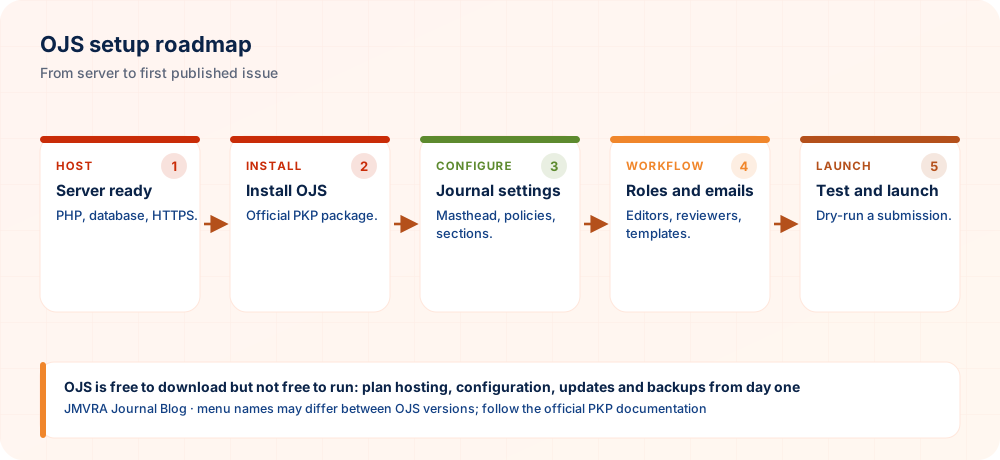
Step 1: Get the Hosting Ready
| Requirement | What to plan |
|---|---|
| Web server | Linux server running a compatible web server — managed hosting or a VPS rather than a free subdomain |
| PHP and database | A PHP release that your OJS version supports, together with MySQL/MariaDB or PostgreSQL |
| HTTPS | SSL certificate installed for your own domain |
| Dependable outgoing email (SMTP) so that authors and reviewers receive notifications | |
| Storage | A files directory kept outside the public web root, with space for growth |
| Scheduled tasks | Cron jobs to handle reminders and automatic deposits |
| People | A person who can install updates and restore backups |
Step 2: Install OJS
- Get the latest stable release only from PKP’s official site.
- Set up a blank database along with a database user protected by a strong password.
- Copy the files to the server, place the files directory outside the web root and grant the web server write permission where needed.
- Open the web installer, choose the language, create the administrator account, then supply file paths and database information.
- Delete or lock the installer, then verify that the site opens over HTTPS.
Step 3: Set Up the Journal Settings
| Area | What to enter |
|---|---|
| Masthead | Title of the journal, ISSN (after it is issued), publisher, editors and contact details |
| About and policies | Scope and aims, peer-review process, open access, copyright and licensing, ethics, fees and archiving |
| Sections | Types of article — research article, review, short communication — each with its review settings |
| Submission checklist | Points authors need to confirm prior to submission |
| Author guidelines | Formatting, template, referencing and declarations |
| Licence | A default licence such as CC BY 4.0, displayed on each article |
| Appearance | Theme, logo and easy-to-read navigation; check it on mobile |
To see every page a journal website requires, read academic journal website: required pages and SEO.
Step 4: Arrange the Editorial Workflow
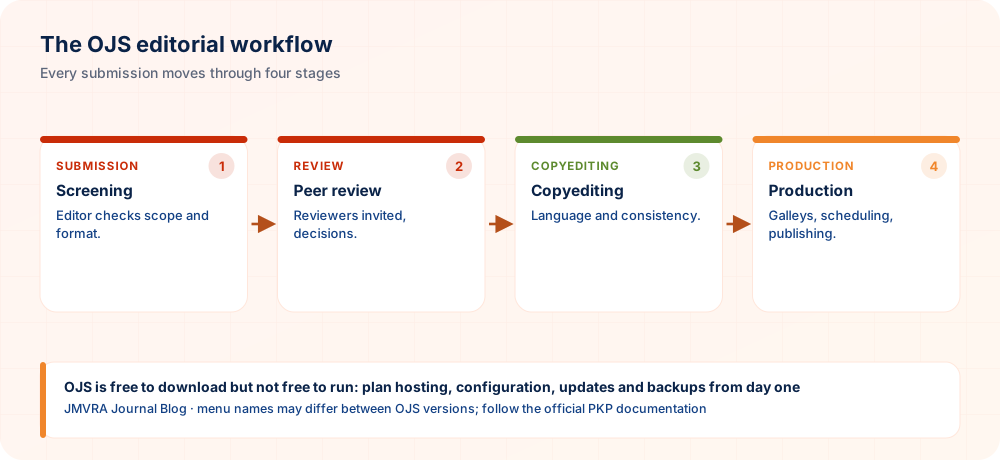
Choose the review method (for example double-blind), the default reviewer response time and review deadlines, build review forms around your criteria, and decide who may make decisions. Draft your review policy beforehand; see writing a peer review policy. Clear deadlines and criteria help reviewers respond consistently and keep authors informed.
Step 5: Assign Roles and Add Users
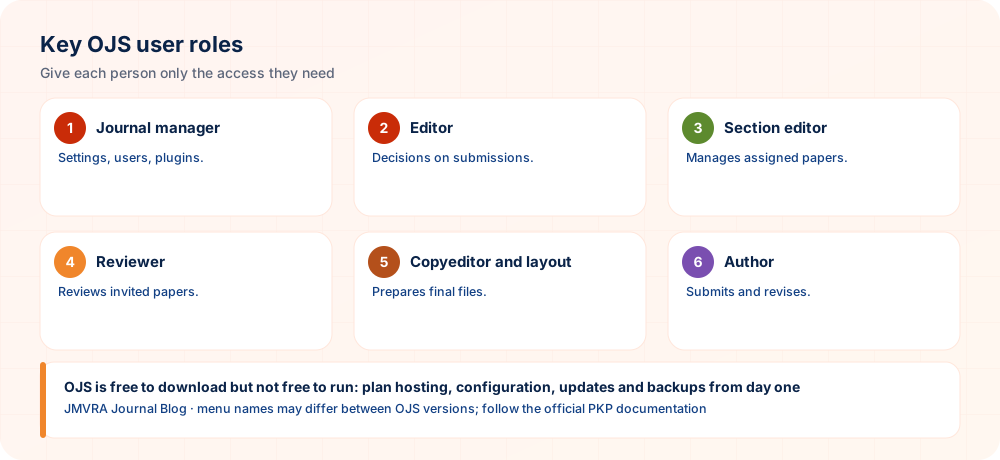
Grant each person only the lowest level of access they need. Keep journal manager rights to a small group, use personal accounts (never shared logins) and delete accounts once people move on.
Step 6: Customise the Email Templates
OJS sends numerous automatic messages, such as submission acknowledgements, reviewer invitations, reminders and decisions. Adapt every template with the journal’s name, a clear signature and correct details. Delete any promise of a fixed decision date and ensure decisions go out from an address someone monitors. Sending a test message from each template shows how it will actually look to recipients.
Step 7: Switch On the Key Plugins
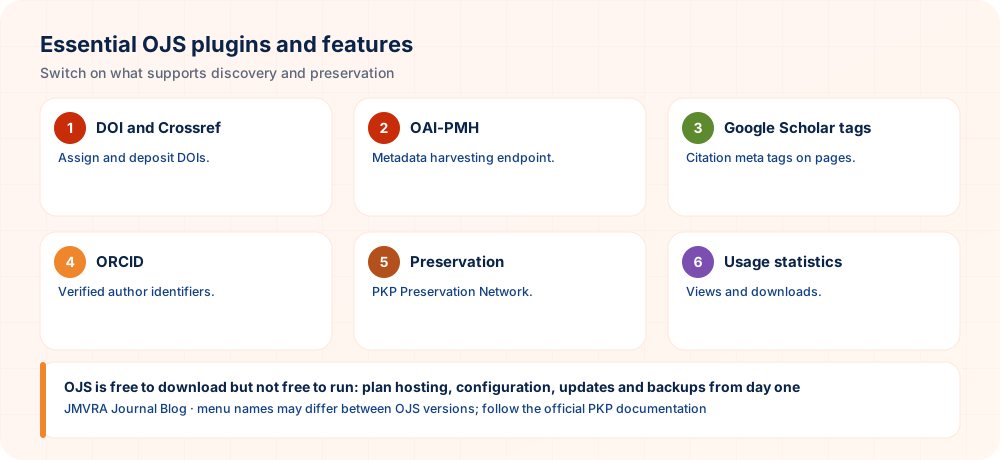
- DOI and Crossref registration: allocate DOIs and deposit metadata after you obtain a prefix; see Crossref DOI registration for journals.
- OAI-PMH: included by default; allows indexes and repositories to harvest your metadata.
- Google Scholar meta tags: inserts citation tags into article pages; see the journal metadata checklist.
- ORCID: allows authors to connect verified iDs.
- PKP Preservation Network: long-term preservation for OJS journals that qualify; see repositories and journal archiving.
Step 8: Keep It Secure, Updated and Backed Up
| Task | Practice |
|---|---|
| Updates | Install OJS security releases and server updates quickly, trying them on a copy first |
| Backups | Regularly back up the database and files directory, keep copies away from the server and try a restore |
| Accounts | Use strong passwords; delete privileged users who are inactive |
| Spam | Turn on registration safeguards against fake accounts |
| Monitoring | Monitor error logs and uptime; confirm that scheduled tasks are running |
Further reading: journal website hosting and security checklist.
Step 9: Run Tests Prior to Launch
- Submita trial manuscript while acting as an author
- Reviewit using a dummy reviewer account
- Decideand dispatch every decision email
- Publisha trial issue and delete it afterwards
- Checkthe article pages, PDF files and meta tags
- Restorethe site from a backup at least once
Frequent OJS Set-Up Errors
- Placing the files directory within the public web root.
- Outgoing email that does not work, leaving authors without their decisions.
- Empty policies, or ones lifted from a different journal.
- Failing to update once installed.
- No tested backup.
Getting Help
For authoritative help, use the PKP documentation hub and the PKP community forum. If you would rather not run OJS yourself, managed hosting or a journal management platform is an option; the JMVRA publisher network has its own platform, jwjms.org, covered in Open Journal System and jwjms.org. Our guide on how to start a new journal is a useful next read.
Get Your Own Research Published in JMVRA
Managing a journal is not the same as publishing in one. Researchers seeking a peer-reviewed venue for their own paper can send it to JMVRA, which takes submissions at all times.
JMVRA in brief
- Review: transparent, double-blind peer review, normally by at least two subject experts. Specialist reviewers assess your paper, and you receive the acceptance or rejection decision by email and WhatsApp.
- Fee: ₹971 INR (Indian authors) or $41 USD (foreign authors) is payable after acceptance only; submission and review cost authors nothing.
- Access: openly published under CC BY 4.0; ISSN 2984-8911; issued monthly; no submission deadline; Crossref DOI on request.
- Indexing: JMVRA appears in Google Scholar and is registered with Crossref and the ISSN Portal / ROAD; it is not currently indexed in Scopus, Web of Science or DOAJ.
Share Your Research Through JMVRA
Submit your research to JMVRA for publication
JMVRA (ISSN 2984-8911) is a peer-reviewed, open access journal spanning many disciplines. Submission is free. Specialist reviewers assess your paper, and you receive the acceptance or rejection decision by email and WhatsApp.
- 1. Get ready by reading the guidelines
- 2. Submit online
- 3. Peer review
- 4. Decision by email & WhatsApp
- 5. Open-access publication
Your At-a-Glance Checklist
- HostingHTTPS, PHP, database
- FilesOutside web root
- PoliciesAll completed
- EmailWorking SMTP
- PluginsDOI, OAI, Scholar
- BackupsTested restore
Practical Tips for Running a Smooth Open Journal Systems Setup
Launching a journal platform involves technical decisions that are hard to undo once authors arrive. These suggestions help new editors and administrators avoid common stumbles before going live.
- Rehearse on a test site. Install a separate practice copy and push dummy submissions through every stage. Mistakes found there cost nothing, while the same errors on a live journal damage author confidence.
- Write your policies first. Draft the aims, scope, ethics statement and review model in plain language before configuring settings. Having agreed text ready makes setup faster and keeps the journal consistent.
- Limit administrator accounts. Give each editor only the permissions that role needs, and use strong, unique passwords. Fewer powerful accounts mean fewer ways for accidents or intrusions to happen.
- Test your backups. A backup is only useful if it restores. Periodically recover a copy onto a spare environment and confirm that files, database and uploaded articles all return intact.
Rehearse, document decisions, restrict access and verify backups, so your launch is controlled rather than improvised.
Questions Researchers Often Ask
In Summary
OJS offers a new journal a well-tested workflow, yet trust comes only from careful configuration: protected hosting, full policies, sensible user roles, truthful email templates, plugins for discovery and preservation, and backups you have actually tested. Follow these steps, try a full submission from start to finish, and keep maintaining the system once it is live.
Time to publish: submit your paper to JMVRA
JMVRA (ISSN 2984-8911) is a peer-reviewed, open access journal spanning many disciplines. Submission is free. Specialist reviewers assess your paper, and you receive the acceptance or rejection decision by email and WhatsApp.
- 1. Get ready by reading the guidelines
- 2. Submit online
- 3. Peer review
- 4. Decision by email & WhatsApp
- 5. Open-access publication
References and Further Resources
OJS Setup in Brief
- HostHTTPS server
- InstallOfficial release
- ConfigurePolicies, sections
- WorkflowRoles, emails
- LaunchTest first
Related: What is OJS · Start a journal · Submit Paper.
Ready to Publish? Submit to JMVRA
JMVRA is aligned with UGC's Suggested Parameters for Choosing Peer-Reviewed Journals.
JMVRA is a Transparent, Peer-Reviewed, Open Access Journal (Refereed Journal). Following the discontinuation of the UGC and UGC-CARE journal listing, and in alignment with the latest UGC-CARE recommendations and guidelines, JMVRA is aligned with UGC’s Suggested Parameters for Choosing Peer-Reviewed Journals.
Handy links within jmvra.org
Key Terms
Subjects and search phrases this article addresses.
Related Reading
Additional guides about launching and running a journal.
Open Journal Systems (OJS) Explained
Read the guide RelatedOJS or a Custom Journal System?
Read the guide RelatedPages Every Academic Journal Website Needs
Read the guide RelatedLaunching a Journal: 50 Items to Finish Before Issue 1
Read the guide RelatedDrafting a Peer Review Policy for a New Journal
Read the guide RelatedHow Journals Obtain Crossref DOIs
Read the guideKeep Reading on the JMVRA Blog
The JMVRA journal blog includes this guide, one of many practical pieces on publishing, indexing, metrics and research integrity, prepared so readers can verify them without any sales pitch.