Digital Object Identifier (DOI)
A Permanent Address for Your Research
A URL can break. A DOI cannot. It resolves to your paper for as long as the paper exists, which is what makes it citable in a reference list years after publication — and it is the identifier indexing databases match on.
DOI Charges
One-time charge per research paper, payable after your paper has been accepted. The same charge covers Crossref or DataCite registration.
Journal of Modern and Versatile Research Approach (JMVRA) is a registered Crossref member and offers Digital Object Identifier (DOI) services for published articles on request (additional charges apply). The journal provides low cost journal publication with a transparent Peer Review Journal Publication system, recognized UGC CARE Approved Journal Publication, and publishing practices meeting Scopus Journal indexing standard expectations.
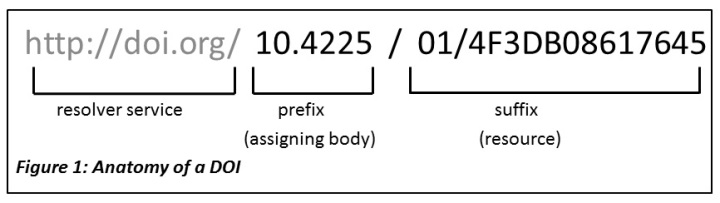
A Digital Object Identifier (DOI) is a permanent and unique alphanumeric identifier assigned to scholarly content such as journal articles. Operated by the International DOI Foundation since 2000, the DOI system ensures long-term, stable, and reliable access to digital research outputs.
Unlike standard web URLs that may change or become inactive over time, a DOI remains constant throughout the lifetime of the document. If the location of the content changes, only the associated metadata is updated, allowing uninterrupted access and accurate citation.
Each DOI is linked with structured metadata, including the article title, author details, publication information, and the current online location. This makes DOI-enabled content actionable, discoverable, and interoperable across academic databases and citation systems. Only authorized publishers registered through official DOI agencies such as Crossref are permitted to assign DOIs.
Today, the DOI system is an essential component of global Journal Publication, widely adopted in academic publishing with tens of millions of identifiers assigned worldwide, supporting citation integrity, research visibility, and long-term scholarly access.

Crossref and DataCite — Both Under doi.org
A DOI is not issued by doi.org directly. The International DOI Foundation accredits registration agencies, and both of the agencies that matter for scholarly work resolve through the same doi.org system. A Crossref DOI and a DataCite DOI are equally permanent and equally citable — they differ in what they are built to describe.
Crossref
For journal articles & conference papersThe registration agency used by academic publishers. JMVRA is a registered Crossref member, and this is the default choice for a published research paper.
- Built for articles, proceedings, books and chapters
- Powers reference linking between published papers
- Feeds cited-by counts and citation databases
- What most journals and indexers expect to see
DataCite
For datasets, software & thesesThe registration agency for research outputs that are not journal articles. Available on request where your output needs its own citable identifier.
- Built for datasets, software, samples and models
- Used by repositories and theses collections
- Makes data citable in its own right, separately from the paper
- Increasingly required by funders as a condition of a grant
Not sure which applies? For a research paper published here, Crossref is almost always the right answer. If you also need a citable identifier for an underlying dataset — see the Data Availability Policy — ask about DataCite when you order.
What Happens When Someone Clicks Your DOI
A DOI is not a web address for one server — it is a lookup. The reader clicks the DOI, the global resolver at doi.org reads the current location from the registered metadata, and forwards the reader there. If the paper ever moves, only that one record is updated, and every DOI link already printed in a reference list keeps working.
How to Cite a Paper With Its DOI
Most citation styles now ask for the DOI written as a full link. Put it at the end of the reference, and do not add a full stop after it — that would become part of the link. The examples below use placeholders; replace them with your paper’s own details.
Author, A. A., & Author, B. B. (Year). Title of the article. Journal of Modern and Versatile Research Approach, Volume(Issue), pages. https://doi.org/10.xxxx/xxxxxAuthor, A. A., and B. B. Author. “Title of the Article.” Journal of Modern and Versatile Research Approach, vol. X, no. X, Year, pp. xx–xx, https://doi.org/10.xxxx/xxxxxPaste the DOI into a reference manager (Zotero, Mendeley, EndNote) and it fills in the title, authors, journal and year from the registered metadata.What a DOI Actually Does for You
With a DOI vs. Without One
| Situation | Plain URL only | With a DOI |
|---|---|---|
| If the site is reorganised | The link dies | Still resolves |
| Citation matching | Manual, often missed | Automatic |
| Reference manager import | Typed by hand | One click, correct fields |
| Cited-by counts | Not tracked | Tracked and visible |
| Accepted in a thesis reference list | Sometimes queried | Standard practice |
| Verifiable for an appraisal | Needs explaining | Resolves on its own |