
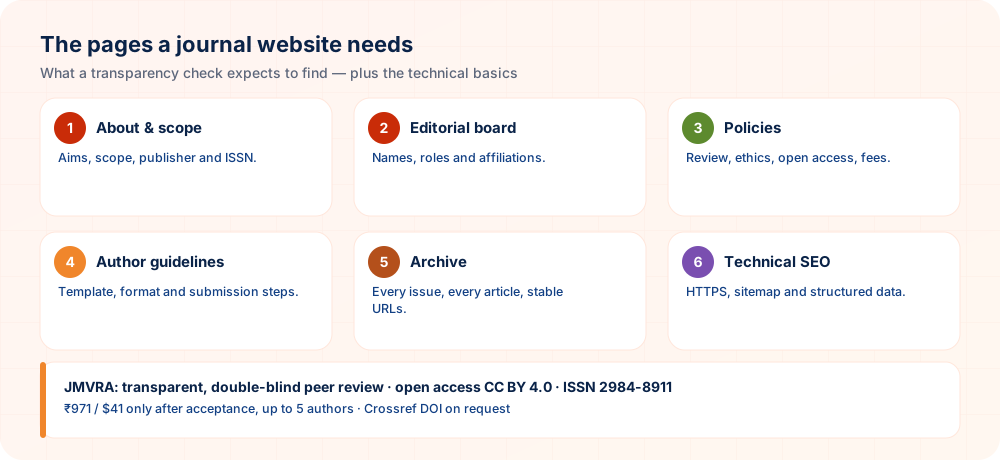
Quick answer: A trustworthy journal website needs around two dozen separate pages, running from About and Aims & Scope to Peer Review, Ethics, Copyright, Archiving and Complaints, together with the technical essentials: HTTPS, a sitemap, crawlable article pages, structured data and mobile usability. A transparency check notices missing pages before anything else. Draw up a page inventory and tick each item off before asking anyone to review the site.
Required Pages
Technical SEO Requirements
HTTPS & clean URLs
A valid certificate, plus stable and readable article addresses.
Crawlable HTML
Not concealed behind JavaScript rendering or a login wall.
XML sitemap & robots.txt
Set up properly, so crawlers reach every page and none is blocked by mistake.
Canonical URLs
A single authoritative address for each article, avoiding confusion over duplicate content.
Structured data
Machine-readable article metadata that search engines can read directly.
Speed & mobile usability
Quick page loads and a layout that suits any device.
Compare JMVRA's Own Site With This List
Each page on this checklist should be possible to verify independently on jmvra.org.
Visit JMVRA Submit PaperCommon Search Terms
Practical Tips for Building a Trustworthy Journal Website
A journal website is the first evidence readers and authors see. These practical measures help editors present information clearly, protect visitors and keep the site dependable.
- Put contact details where people look. Give a working editorial email and the publisher's name on a dedicated page linked from the menu. Hidden or missing contacts make visitors suspicious immediately.
- Test on a real phone. Open every key page on a modest mobile device and a slow connection. Many scholars read on phones, and unreadable layouts quietly turn them away.
- Write descriptive link and image text. Use meaningful link wording and alternative text for images so that screen readers and search tools can understand them. This improves access for visually impaired readers.
- Keep policy pages current. Review ethics, review and correction statements whenever practice changes. An outdated policy that contradicts actual behaviour damages credibility more than a short, accurate one.
- Back up and monitor regularly. Schedule automatic backups and check for broken links and expired security certificates. A site that disappears or warns visitors loses trust quickly.
Make contacts visible, test as a visitor would, and keep policies and technical basics accurate and maintained.
Making Journal Websites Accessible
| Area | Practice |
|---|---|
| Text contrast | Colours that all users can read |
| Headings | A logical order for screen readers |
| Images | Alternative text |
| PDFs | Tagged files built on text |
| Forms | A label on every field |
Speed and Mobile Access
- Shrink images — use current formats at the right dimensions
- Cut heavy scripts — load only what each page requires
- Try it on phones — plenty of readers browse on mobile
- Keep article URLs unchanged — so links and citations continue to work
Questions Researchers Often Ask
What is the minimum set of pages a scholarly journal website should have?
Contact, Editorial Board, About, Aims & Scope, Author Guidelines, Submission, Charges, Peer Review, Ethics, Copyright, License, Open Access and Archiving pages — plus current and archived issues and the article pages themselves.
Why should a journal have a page on plagiarism and AI-use policy?
Research-integrity norms now call for both, since explicit rules safeguard originality and tell authors what is acceptable when using AI tools.
Which technical SEO factors count for a journal website?
Speed, mobile usability, HTTPS, clean URLs, crawlable HTML, canonical URLs, structured data, an XML sitemap and robots.txt.
Should complaints and appeals have a page of their own?
Yes — a clearly stated process is expected within a transparent ethics framework.
Why is accessibility important for a journal?
It allows all readers, assistive-technology users included, to access the research.
Do article pages need to work on mobile?
Yes. Many researchers read and search from their phones.
Key References
What This Guide Covers
At-a-Glance Checklist
- All policy pages liveAnd reachable from the menu
- Board up to dateListing affiliations
- Fees statedAhead of submission
- Archive fullNo issues missing
- HTTPS and sitemapSound technical basics
Your Paper's Journey at JMVRA, From Submission to Publication
- SubmissionPaper ID assigned
- ScreenScope & similarity
- ReviewDouble-blind
- DecideEmail & SMS
- AmendItem by item
- AcceptCopyright & fee
- ProduceDOI provided when requested
- PublishMonthly issue
How long review takes depends on the reviewers and on any revision required, so no set turnaround is promised; you are told of acceptance or rejection by email and WhatsApp.
Ready to Publish? Submit to JMVRA
JMVRA is aligned with UGC's Suggested Parameters for Choosing Peer-Reviewed Journals.
JMVRA is a Transparent, Peer-Reviewed, Open Access Journal (Refereed Journal). Following the discontinuation of the UGC and UGC-CARE journal listing, and in alignment with the latest UGC-CARE recommendations and guidelines, JMVRA is aligned with UGC’s Suggested Parameters for Choosing Peer-Reviewed Journals.
Handy links within jmvra.org
Key Terms
Subjects and search phrases this article addresses.
Related Reading
Further reading on the same theme from the JMVRA blog.
How to Become a JMVRA Reviewer: Eligibility, Registration & Benefits
Read the guide RelatedJMVRA Open Access Policy: Free to Read
Read the guide RelatedOJS or a Custom Journal System?
Read the guide RelatedAbout JMVRA
Read the guide RelatedConference Management Systems Explained
Read the guide RelatedPrivacy Policy
Read the guideKeep Reading on the JMVRA Blog
The JMVRA journal blog includes this guide, one of many practical pieces on publishing, indexing, metrics and research integrity, prepared so readers can verify them without any sales pitch.