
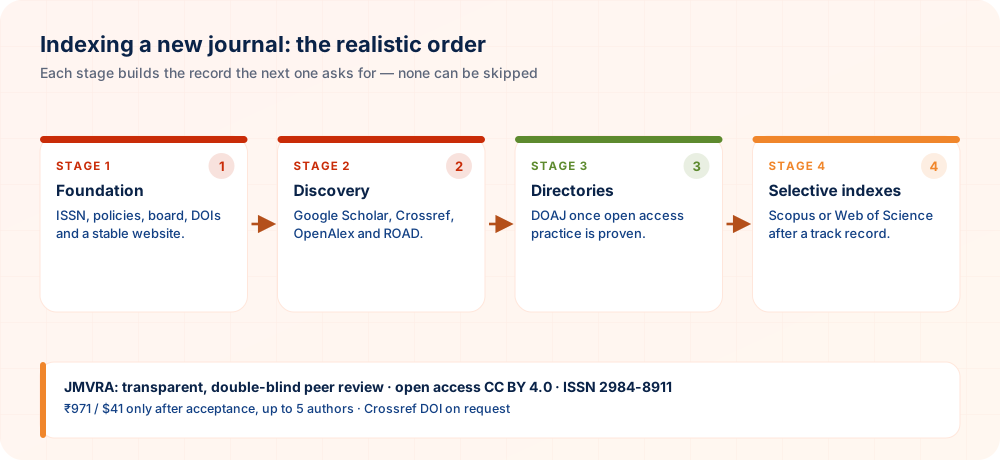
Quick answer: Indexing goes in a set sequence. First lay the groundwork (ISSN, editorial board, peer review, ethics, metadata); next, get listed in discovery services (Google Scholar, plus DOAJ for open-access titles); only after a sustained publication record should you aim for selective indexes such as Scopus or Web of Science. No route begins at the final stage.
A Three-Stage Roadmap
Foundation
Identity
An ISSN, a genuine publisher and one consistent title on all platforms.
Governance
A named editorial board, documented peer review and published ethics.
Infrastructure
Accurate metadata, a preservation plan and a stable website.
Discovery Listing
Once the foundation exists, concentrate on Google Scholar discoverability (crawlable pages and accurate metadata) and, for open-access titles, on a DOAJ application after a publication history has been established. Fix any crawl or metadata problems first, since an application reviewed on a broken site rarely goes well.
Selective Indexes
Scopus and Web of Science look for steady publication, demonstrated content quality and citation standing, none of which can be produced quickly. This stage follows from the first two instead of being a separate shortcut.
Ongoing Monitoring
Nothing about indexing is permanent. Selective databases periodically review what they cover, so holding on to a place means going on satisfying the standard that won it: steady quality, sound ethics and regular output, without a cut-off point.
Read the Guides for Each Database
Full criteria for Scopus, Web of Science and DOAJ are covered in separate dedicated guides.
Scopus Guide Web of Science GuideCommon Search Terms
Practical Tips for New Journals Seeking Indexing
Indexing is earned through consistent editorial quality over time, not requested once and granted. These habits prepare a new journal for the long, patient road that sensible editors follow.
- Keep an honest progress log. Record publication dates, review practices and policy changes in a simple internal file. When an evaluator asks questions, accurate history is far better than reconstructed memory.
- Publish on a regular rhythm. Reliable publication schedules show that the journal is active and organised. Skipped issues and sudden gaps raise doubts that are hard to dispel afterwards.
- Read each service's criteria carefully. Before applying anywhere, study the published eligibility conditions and compare them with your journal's actual practice. Applying too early wastes effort and can harm your standing.
- Avoid paying for promised listings. Be wary of intermediaries who offer listings in return for fees. Legitimate evaluation rests on the journal's content and conduct, not on a purchased arrangement.
- Strengthen the basics continuously. Improve metadata, ethics statements and author diversity while waiting. These improvements help readers regardless of whether any listing is ever granted.
Concentrate on regular, honest publishing and read eligibility criteria closely, instead of chasing quick or paid offers.
Why Indexing Cannot Be Rushed
Track record
Databases expect a run of regular issues spanning several years.
Quality evidence
Citations, an editorial board and peer review.
Evaluation queues
Applications are handled one after another.
Re-evaluation
Journals already indexed are kept under ongoing watch.
Shortcuts That Backfire
| Shortcut | Risk |
|---|---|
| Claiming indexing before being accepted | Loss of trust and possible rejection |
| Citation manipulation | Removal from databases |
| Publishing off-topic papers to build up volume | Poor evaluation |
| Paying “indexing agents” | Fake listings |
Questions Researchers Often Ask
In what order should a new journal pursue indexing?
Start with the foundation, then discovery listing, and — once a sustained record exists — eligibility for selective indexes.
Can a journal go directly to Scopus, skipping discovery listing?
Not realistically — selective databases want the same basic evidence that a discovery listing already examines.
How long does the whole indexing roadmap last?
There is no fixed timeline; for selective-index eligibility, expect years rather than months.
Does the quality of metadata really influence indexing results?
Yes — evaluators and crawlers read the metadata itself, so mistakes there can weaken an otherwise strong application.
Is it possible to buy indexing?
No. Genuine databases evaluate journals themselves; “indexing” sold for payment is a warning sign.
Is it possible for a journal to lose its indexing?
Yes. Databases drop journals that stop satisfying their criteria.
Key References
What This Guide Covers
At-a-Glance Checklist
- Groundwork finishedPrior to any application
- Metadata tidyCrossref deposits are correct
- Record establishedRegular issues, on schedule
- Honest applicationsCriteria satisfied, not just asserted
- Progress trackedCoverage reviewed regularly
Your Paper's Journey at JMVRA, From Submission to Publication
- UploadPaper ID issued
- ScreenScope & similarity
- ReviewDouble-blind
- DecideEmail & SMS
- ReviseRespond point by point
- AcceptCopyright & fee
- ProduceObtainable DOI, on request
- PublishMonthly issue
How long review takes depends on the reviewers and on any revision required, so no set turnaround is promised; you are told of acceptance or rejection by email and WhatsApp.
Ready to Publish? Submit to JMVRA
JMVRA is aligned with UGC's Suggested Parameters for Choosing Peer-Reviewed Journals.
JMVRA is a Transparent, Peer-Reviewed, Open Access Journal (Refereed Journal). Following the discontinuation of the UGC and UGC-CARE journal listing, and in alignment with the latest UGC-CARE recommendations and guidelines, JMVRA is aligned with UGC’s Suggested Parameters for Choosing Peer-Reviewed Journals.
Further reading on jmvra.org
Key Terms
Subjects and search phrases this article addresses.
Related Reading
Further reading on the same theme from the JMVRA blog.
Why Is JMVRA's Impact Factor 11.25? Google Scholar H-Index Explained
Read the guide RelatedJMVRA's Transparency Statement in Practice
Read the guide RelatedHow JMVRA Follows DOAJ Open Access Standards
Read the guide RelatedFrom Submission to Google Scholar: The Stages of Getting a Paper Listed
Read the guide RelatedWhy JMVRA Adheres to Scopus Journal Indexing Standards — Uncompromised Quality at ₹971 INR
Read the guide RelatedWriting an Abstract Editors Accept
Read the guideKeep Reading on the JMVRA Blog
This article sits on the JMVRA journal blog, where practical guidance covering publishing, indexing, metrics and research integrity is written to be verifiable, not promotional.