
Every policy document issued by JMVRA, the Journal of Modern and Versatile Research Approach.
Policies Worth Reading Before You Submit
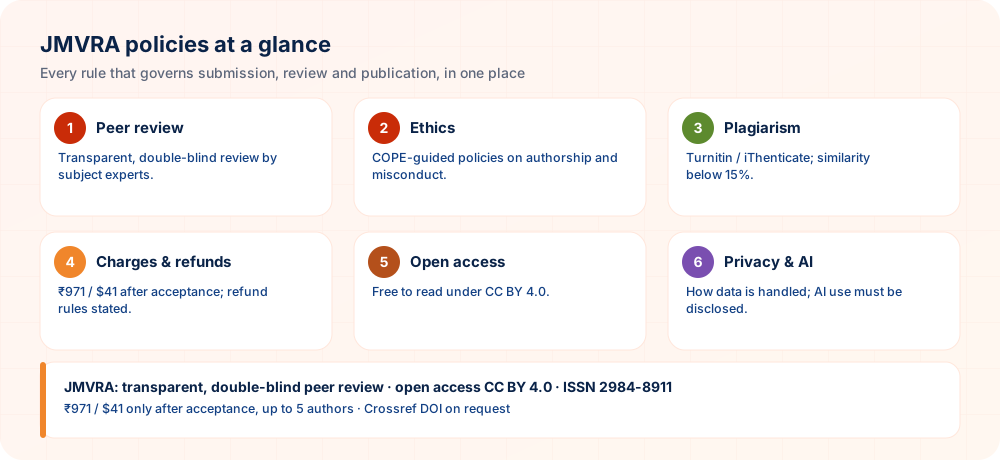
| Policy | Why read it |
|---|---|
| Publication charges | Find out the fee and when it is collected |
| Peer review | The way your paper is evaluated |
| Ethics and malpractice | What authors are expected to do |
| Open access | The ways your work can be reused |
Main Points in Brief
Fee after acceptance
₹971 INR for Indian authors or $41 USD for foreign ones, covering up to 5 authors.
Double-blind review
Open, and reviewers' comments are passed on to authors.
Similarity below 15%
Checked before publication.
CC BY 4.0
Open access, with copyright staying with the authors.
Practical Tips for Reading Journal Policies Properly
Policies are easy to skim and just as easy to misunderstand. Reading them with a purpose helps you avoid ethical trouble and plan your submission with fewer surprises.
- Read before you write. Review the authorship, data and originality rules while your manuscript is still in draft. Adjusting a paper early costs far less effort than repairing it after a query.
- Make a personal checklist. Turn each policy into a few yes or no checks, such as permissions obtained or conflicts declared. Tick them off just before uploading your files.
- Note the rules on AI tools. If you used writing or analysis software, find out how the journal expects such use to be disclosed. Honest disclosure is safer than hoping nobody asks.
- Understand retraction and correction. Learn how errors, misconduct and corrections are handled so that you know your responsibilities and rights. Acting quickly on a genuine mistake is viewed far better than concealing it.
- Ask when wording is unclear. If a clause seems ambiguous, email the editorial office and keep the answer. A written clarification is better evidence than a personal assumption.
Convert the policies into a checklist before you submit, and ask in writing whenever the meaning is uncertain.
Questions Researchers Often Ask
At-a-Glance Checklist
- Review policy studiedPrior to submission
- Ethics rules understoodAuthorship and conflicts stated
- Similarity verifiedUnder 15%
- Fee and refund rulesGo through them ahead of acceptance
- AI use declaredWhen a tool assisted with the text
Your Paper's Journey at JMVRA, From Submission to Publication
- SubmissionPaper ID is issued
- ScreenScope & similarity
- ReviewDouble-blind
- DecideEmail & SMS
- ReworkEach point answered
- AcceptCopyright & fee
- ProduceYou can request a DOI
- PublishMonthly issue
How long review takes depends on the reviewers and on any revision required, so no set turnaround is promised; you are told of acceptance or rejection by email and WhatsApp.
Ready to Publish? Submit to JMVRA
JMVRA is aligned with UGC's Suggested Parameters for Choosing Peer-Reviewed Journals.
JMVRA is a Transparent, Peer-Reviewed, Open Access Journal (Refereed Journal). Following the discontinuation of the UGC and UGC-CARE journal listing, and in alignment with the latest UGC-CARE recommendations and guidelines, JMVRA is aligned with UGC’s Suggested Parameters for Choosing Peer-Reviewed Journals.
Where to go next on jmvra.org
Key Terms
Subjects and search phrases this article addresses.
Related Reading
Further reading on the same theme from the JMVRA blog.
Tutorials
Read the guide RelatedWhat a Journal Management System Does
Read the guide RelatedOpen-Process Peer Review
Read the guide RelatedFind Published Theses & Dissertations on JMVRA
Read the guide RelatedNaming a New Academic Journal
Read the guide RelatedLaunching an Academic Journal: Concept to First Issue
Read the guideKeep Reading on the JMVRA Blog
Find this guide on the JMVRA journal blog, a collection of practical guidance on publishing, indexing, metrics and research integrity that favours verifiable content over promotion.