
Distinctive, Precise and Durable
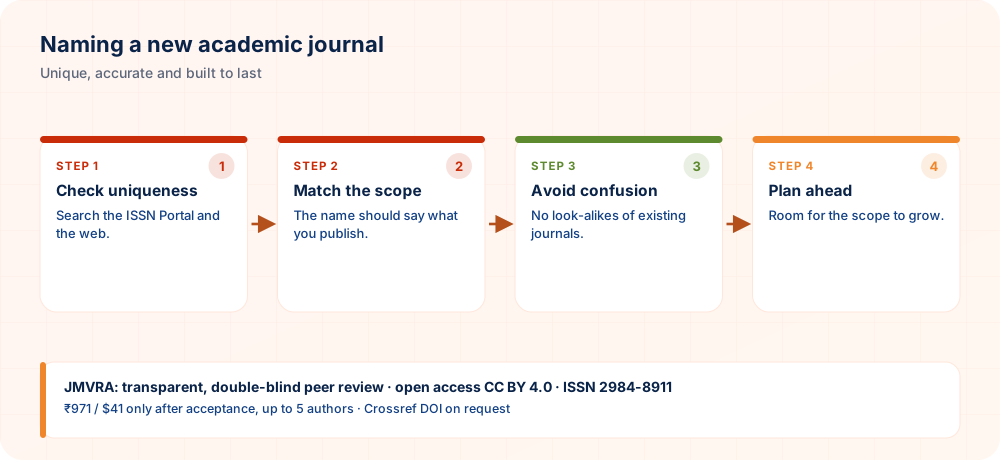
A strong journal title is unique so it will not be mistaken for existing titles, accurate so it shows readers and authors the real scope, and durable so it stays sensible as the journal grows. Since the name ends up in the ISSN registration, citation records and the journal's whole public identity, it is among the hardest choices to undo after launch — settle it before the first issue, not afterwards. Ask a few colleagues from outside your field to read it aloud and say what they expect the journal to cover.
Six Elements of a Good Journal Name
Uniqueness
Different from existing journal titles and acronyms, so nobody confuses them.
Scope accuracy
Shows what the journal really publishes, not an inflated ambition.
Acronym clarity
Test the acronym on its own — a unique full title does not ensure a unique acronym.
Branding
Easy to remember and say, and in line with how the publisher wishes to be known.
Future expansion
Wide enough to allow the scope to grow, yet not so wide that it loses meaning.
ISSN implications
The registered name is the lasting one — plan for permanence, not a placeholder.
Common Naming Pitfalls
Journal Naming Checklist
- Looked up the exact proposed title in the ISSN Portal and across the web
- Looked at the acronym on its own for clashes with unrelated journals
- Made sure the name truly reflects the planned subject scope
- Confirmed that the name differs from the publisher's own name
- Verified that a domain matching the journal title is free
- Asked whether the name will still suit a realistic 5–10 year scope
Shortlisting a Name for Your New Journal
A journal name stays with the project for its entire life and appears on every citation. These steps help founders reach a name that is accurate, distinctive and easy for others to use.
- Say the name aloud. Read candidate titles aloud to colleagues and ask them to write down what they hear. Names that are awkward to say or easy to misspell will cause trouble in citations and conversations.
- Search for look-alikes thoroughly. Look through search engines, library catalogues and ISSN records for similar titles in related fields. Finding a near duplicate early spares you from confusion and possible registration problems.
- Test the acronym separately. Check that the abbreviation is not already in use, is easy to pronounce and carries no unfortunate meaning in other languages. Abbreviations are often used more than full titles.
- Avoid promising too much. Choose words that reflect your real scope, not an ambition you cannot yet support. Overly grand titles invite scepticism and may mislead authors about what you publish.
- Check domain and social handles. Make sure a matching website address and account names are available before you commit. Consistent naming across platforms makes the journal easier to find and harder to imitate.
Test any proposed name by speaking it, searching for look-alikes and checking the abbreviation before you register or announce it.
Vetting a Proposed Name
- Look up the ISSN Portal — for identical or close titles
- Search the web and databases — for names easily mistaken for yours
- Examine the acronym — is someone using it already?
- Look at domain names — can you get a matching one?
Aligning Name and Scope
| Scope | Name approach |
|---|---|
| Single discipline | Name the discipline |
| Regional focus | Include the region |
| Multidisciplinary | Wide, yet not deceptive |
| Methods-focused | Indicate the methodological area |
Journal Naming FAQs
Why is a unique journal name so important?
A title too similar to an existing journal can confuse readers and may seem deceptive, even when unintended.
Should the name state the precise scope?
A precise name lets readers and authors judge fit for themselves; a name that is too broad produces a mismatch.
Does a shared acronym cause trouble?
Yes, it leads to real confusion in citations and searches, even when the full names are different.
Is renaming a journal possible after it launches?
It can be done, but it disrupts the ISSN record, citations and how readers recognise the journal.
Is the ISSN registration tied to the name?
Yes, the ISSN is recorded against one specific title, so a rename complicates the record.
Is it wise to look for trademark conflicts?
A sensible precaution, particularly for journals operating internationally.
Does a wider name help future growth?
A name that is fairly broad but still accurate works best — an excessively broad one erodes trust.
How can I find out whether a name is taken?
Look up the exact title and near variants in the ISSN Portal and on the web.
Ought publisher and journal names to differ?
Usually, yes: it keeps the branding separate and makes it easier to add journals later.
Is a name change allowed for a journal?
Yes, though it normally calls for a new ISSN and a clear announcement to readers.
Should “International” appear in a journal title?
Only when its authors, editors and readers truly come from many countries.
Related Searches
Read Next
Do You Have a Completed Paper Rather Than a New Journal?
Respond to JMVRA's open call for papers directly; there is nothing to name.
Submit Paper OnlineAt-a-Glance Checklist
- No lookalikesDifferent from existing titles
- Scope shownPrecise, not exaggerated
- Acronym verifiedNot taken yet
- Domain freeMatches the title
- ISSN impactA later title change requires a new ISSN
Your Paper's Journey at JMVRA, From Submission to Publication
- UploadPaper ID issued
- ScreenScope & similarity
- ReviewDouble-blind
- DecideEmail & SMS
- ReviseRespond point by point
- AcceptCopyright & fee
- ProduceObtainable DOI, on request
- PublishMonthly issue
How long review takes depends on the reviewers and on any revision required, so no set turnaround is promised; you are told of acceptance or rejection by email and WhatsApp.
Ready to Publish? Submit to JMVRA
JMVRA is aligned with UGC's Suggested Parameters for Choosing Peer-Reviewed Journals.
JMVRA is a Transparent, Peer-Reviewed, Open Access Journal (Refereed Journal). Following the discontinuation of the UGC and UGC-CARE journal listing, and in alignment with the latest UGC-CARE recommendations and guidelines, JMVRA is aligned with UGC’s Suggested Parameters for Choosing Peer-Reviewed Journals.
Further reading on jmvra.org
Key Terms
Subjects and search phrases this article addresses.
Related Reading
Further reading on the same theme from the JMVRA blog.
How to Become a Reviewer for JMVRA: Eligibility, Registration & Benefits
Read the guide RelatedJMVRA Peer Review Policy: Double-Blind by Experts
Read the guide RelatedFAQ
Read the guide RelatedStart Here: JMVRA Blog Reading Paths
Read the guide RelatedWhat a Journal Management System Does
Read the guide RelatedJW Publication
Read the guideKeep Reading on the JMVRA Blog
This article sits on the JMVRA journal blog, where practical guidance covering publishing, indexing, metrics and research integrity is written to be verifiable, not promotional.