
Numerous researchers must publish in Scopus indexed journals for a PhD, a promotion or a grant. Yet a journal’s website, an advertisement or a list from a third party does not count as proof. The one dependable test is the journal’s own entry in the official Scopus Sources database, showing the exact title, ISSN, publisher, coverage years and present status. Below you will learn, step by step, how to find and verify a Scopus-indexed journal ahead of submission. Keep a screenshot or note of what you found, with the date, in case you need to show it later.
Defining Scopus-Indexed Journals
Elsevier operates Scopus, a large abstract and citation database. An independent board evaluates journals before selection, after which their articles are indexed together with abstracts, references and citations. A Scopus-indexed journal is a journal whose content Scopus covers during the years listed in its source record.
Checking indexing before submission is common because institutions, funders and selection committees often mention Scopus in their rules. The crucial word is verify: examine the particular journal at the official source for the year in which you will publish, rather than relying on an advertisement, a screenshot or an outdated list. Our complete guide to finding Scopus-indexed journals gives background.
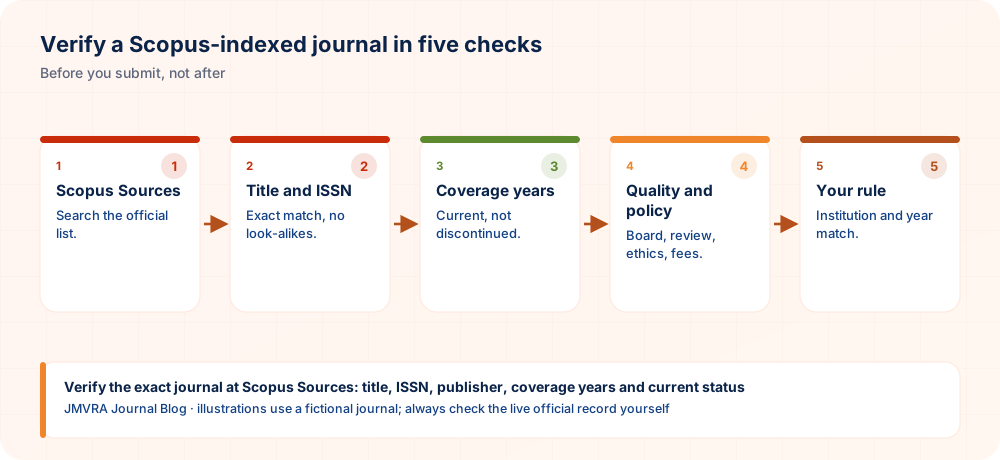
An Overview of the Verification Steps
Step 1: Visit the Official Scopus Sources Website
Visit www.scopus.com/sources, which is free and requires no subscription. Your search can use:
- Title: enter the exact name of the journal.
- ISSN: this gives the most accurate results; try the print ISSN as well as the electronic ISSN.
- Publisher: lists every title issued by a given publisher.
- Subject area: lets you explore the journals of one field and narrow them by open access status or CiteScore band.
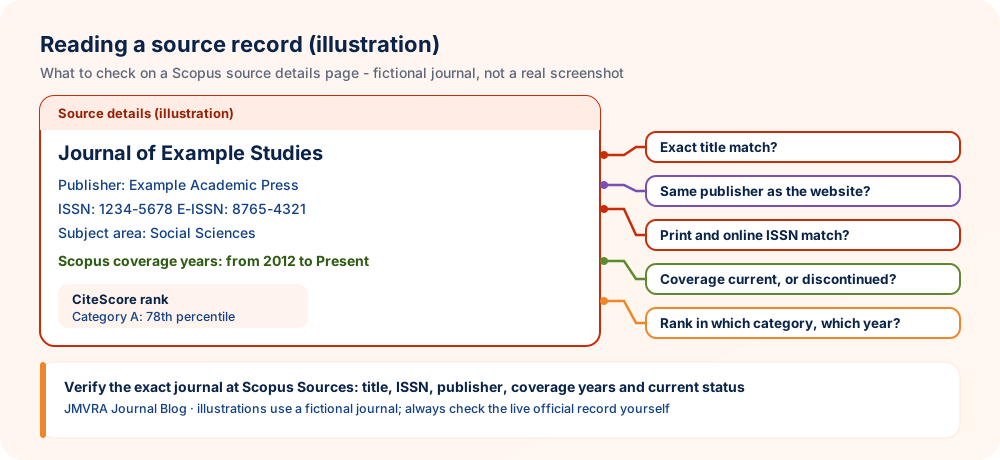
Go to the journal’s source details page, where you will see its title, publisher, ISSN and E-ISSN, subject areas, the years Scopus covers and metrics like CiteScore along with its rank within every subject category. Take a note of anything that looks inconsistent with the journal’s own website.
Step 2: Confirm the Journal Title and ISSN
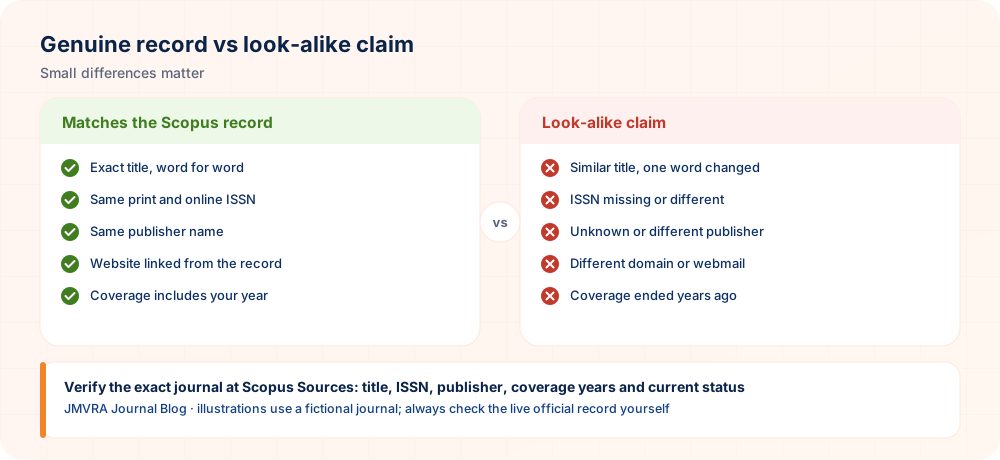
- Title: the full title must match exactly, word for word. Imitation titles frequently swap a single word (“International”, “Advanced”, “Research”).
- ISSN: compare the print or electronic ISSN shown on the journal’s website with the record, and verify it again at the ISSN Portal.
- Publisher: the publisher named in the record should be the same as the one on the website.
- Website: rely on the journal website that official records point to; cloned sites reuse genuine names and ISSNs under another domain.
Our journal hijacking guide tells you more about cloned sites.
Step 3: Examine Coverage Years and Present Status
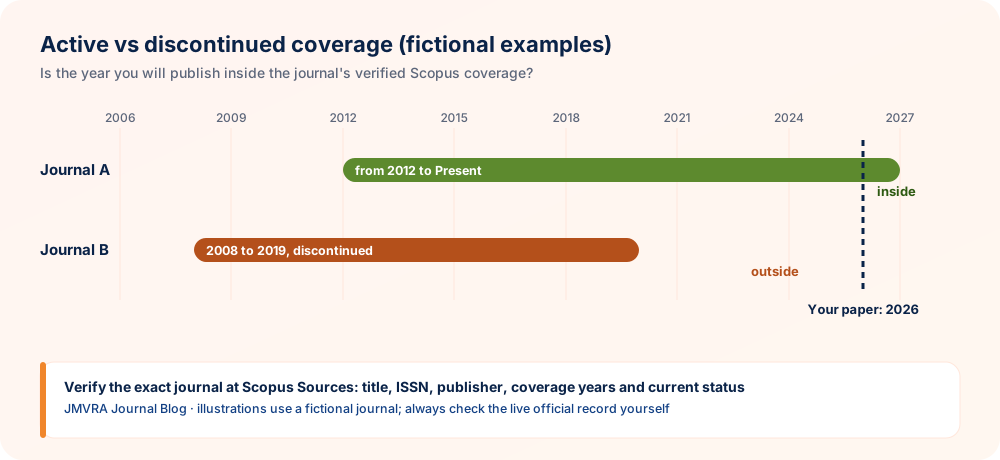
Coverage years show which years of a journal’s output Scopus includes. Past coverage and present coverage are not the same thing:
- “from [year] to Present”: the coverage is ongoing.
- A closed range flagged as discontinued: after that year Scopus no longer covers new content.
- Gaps: certain records contain interruptions in coverage.
Put the deciding question to yourself: is the year your paper will appear inside the verified coverage? When the record shows discontinued coverage, a new paper will not be indexed, no matter how many years the journal was covered earlier. Treat this as a firm rule rather than something a journal can negotiate.
Step 4: Assess Journal Quality and Publishing Policies
Being indexed does not replace a proper evaluation of the journal. Look at these points too:
| Check | What to look for |
|---|---|
| Editorial board | Editors who are named and whose affiliations and expertise can be verified |
| Peer-review process | A declared review model, with reviewer comments passed to authors |
| Publication ethics | Policies covering plagiarism, conflict of interest, corrections and AI |
| Journal scope | Fit with your topic and article type; comparable recent papers |
| Author guidelines | Plainly stated formatting, referencing and submission requirements |
| Fees | APC amount, timing and what it covers stated beforehand |
| Publisher transparency | Genuine contact details, ownership information and policies |
How to Spot Scopus-Indexed Journals That Have Been Discontinued
Scopus re-assesses titles on a regular basis and may stop covering a journal, for instance over publication concerns or because it falls short of its criteria, as set out in its content policy and selection. Elsevier additionally lists source-title details, discontinued sources included, on its Scopus content page.
- In a discontinued record the coverage range is closed instead of ending with “to Present”.
- Articles from the years that were covered normally stay discoverable in Scopus.
- Articles released after discontinuation do not get indexed.
- A journal that “used to be Scopus-indexed” is different from one that is indexed in Scopus today.
How to Look Up Scopus Quartiles (Q1–Q4)
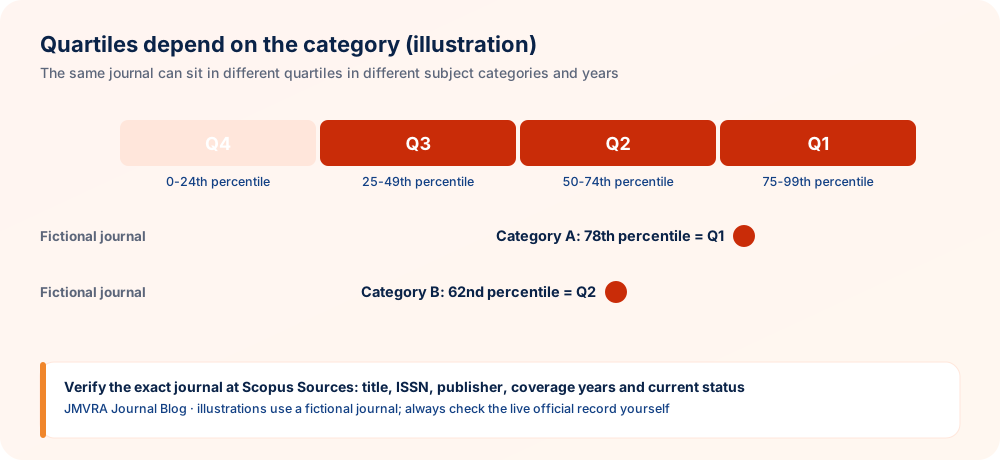
- Subject categories: within each subject category Scopus orders journals by CiteScore and displays a percentile.
- Deriving quartiles from percentiles: the best 25% of a category (the 75th percentile and higher) is commonly named Q1, followed by Q2, Q3 and Q4.
- Category and year both count: a journal listed in more than one category may be Q1 in one and Q2 in another, and rankings shift annually.
- SJR quartiles are not identical: SCImago gives quartiles built on SJR, which may not match CiteScore-based ranks. State clearly which one you are quoting.
Full guide: Scopus Q1, Q2, Q3 and Q4 explained.
How to Recognise False Scopus Indexing Claims
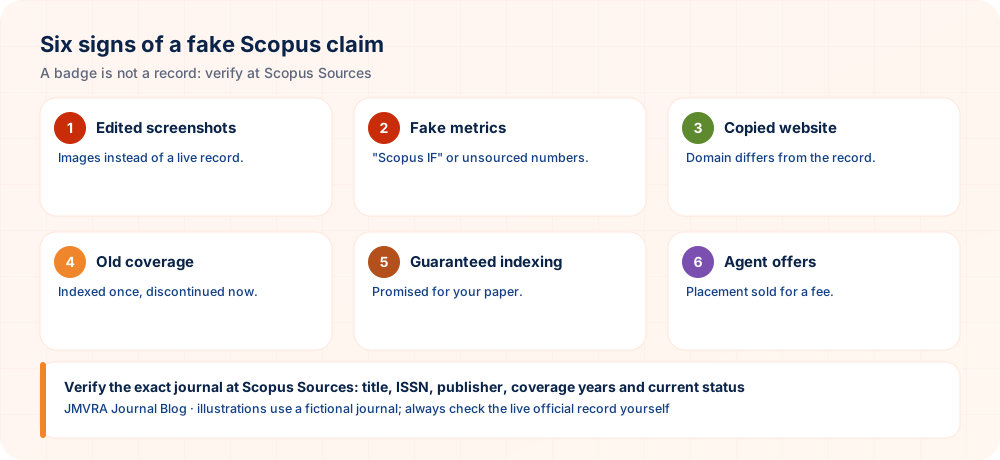
- Deceptive screenshots: pictures of a “Scopus record” in place of a live link you can verify on your own.
- Invented metrics: a “Scopus impact factor”, or figures lacking a source or year — what Scopus publishes is CiteScore, not an impact factor.
- Duplicated journal websites: the title and ISSN of a genuine journal shown on another domain.
- Assurances that indexing is guaranteed for your paper, or that a place can be purchased through an agent.
- Old coverage passed off as current.
Sample Verification Worksheet
Complete this for each journal on your shortlist, and keep a dated screenshot or PDF of the official record.
| Item | What the journal website shows | What the Scopus record shows | Match? |
|---|---|---|---|
| Full title | Journal of Example Studies | Journal of Example Studies | Yes |
| Print ISSN | 1234-5678 | 1234-5678 | Yes |
| Electronic ISSN | 8765-4321 | 8765-4321 | Yes |
| Publisher | Example Academic Press | Example Academic Press | Yes |
| Coverage | “Scopus indexed” | from 2012 to Present | Yes, current |
| Category rank | “Q1” | Category A: 78th percentile | Q1 in Category A only |
| Date checked | — | [today’s date] | Saved PDF |
Things to Verify Before You Submit a Research Paper
- The journal’s scope fits my paper
- The exact title and ISSN are listed in Scopus Sources
- Coverage is current and takes in my year of publication
- Publisher and website agree with the official record
- Quartile looked up for the correct category and year (if needed)
- Peer-review and ethics policies are available publicly
- Fees, when they are charged and what they cover are clear
- Publication timeline described, with no guarantees
- My institution’s present requirement has been confirmed
- A dated screenshot or PDF of the record is saved
Keep reading: how to publish a research paper, then how to choose the right journal, and finally timely and transparent journals.
Scopus Indexed Journals in India: Follow Your Institution’s Rule
A good number of Indian universities and colleges specify Scopus or Web of Science for PhD, appointment or promotion purposes. During the period the UGC-CARE list was in operation, Scopus and Web of Science journals came under its Group II; UGC has since ended the CARE listing and published suggestive parameters for choosing peer-reviewed journals. Get your institution’s present rule confirmed in writing. Refer to the UGC-CARE journal list and current guidance and Scopus vs Web of Science. Written confirmation protects you if a requirement is questioned later.
Where JMVRA Stands
You can find JMVRA in Google Scholar, and it is registered with Crossref and the ISSN Portal / ROAD, but it is not currently indexed in Scopus, Web of Science or DOAJ. If your institution insists on Scopus, choose a journal that you have confirmed in Scopus Sources through the steps above. If a genuine peer-reviewed venue is all it asks for, JMVRA provides transparent double-blind review and open access under CC BY 4.0, with a fee of ₹971 INR (Indian authors) or $41 USD (foreign authors) due only once the paper is accepted. Specialist reviewers evaluate your paper, and you are told whether it was accepted or rejected through email and WhatsApp.
Share Your Research Through JMVRA
Place your research in JMVRA
JMVRA (ISSN 2984-8911) is a peer-reviewed, open access journal spanning many disciplines. Submission is free. Specialist reviewers assess your paper, and you receive the acceptance or rejection decision by email and WhatsApp.
- 1. Set up your paper using the guidelines
- 2. Submit online
- 3. Peer review
- 4. Decision by email & WhatsApp
- 5. Finish with open access publication
Your At-a-Glance Checklist
- SourceScopus Sources, not a badge
- IdentityTitle, ISSN and publisher agree
- CoverageCurrent, with your year inside
- QuartileCorrect category and year
- QualityBoard, review, ethics, fees
- EvidenceDated record kept
Documenting Your Scopus Verification Before Submission
Verifying coverage is worthwhile only if you can show what you found. These tips help you keep a clear record and avoid being misled by confident but unsupported claims.
- Keep a short verification note. For each journal, write the title, ISSN, date checked and result in a single line. A brief log is easy to maintain and valuable if a committee later asks.
- Distrust badges and logos alone. A logo on a website proves nothing by itself. Always confirm the claim on the official index, because images are easy to copy.
- Check coverage for the relevant period. A journal may be covered only for certain years. Make sure the period relevant to your future paper is actually included before relying on the listing.
- Ask your institution which evidence it accepts. Some institutions want a screenshot, others a printed record. Learn the expected format early so you never need to repeat verification under deadline pressure.
- Re-check just before submitting. Index status can change between your first look and your submission. A final check takes minutes and avoids unpleasant surprises.
Record what you verified, how and when, and repeat the check shortly before submission so your decision rests on current evidence.
Questions Researchers Often Ask
In Summary
Locating Scopus indexed journals is simple; what counts is verifying them. Rely on the official Scopus Sources record, match the exact title, ISSN and publisher, make sure coverage is current and includes your year of publication, interpret quartiles by category and year, and weigh up the journal’s quality and policies too. Keep a dated record of your checks and follow your institution’s present rule. A short written log of each check also makes later questions easy to answer.
Looking for a peer-reviewed, open access journal? Submit to JMVRA
JMVRA (ISSN 2984-8911) is a peer-reviewed, open access journal spanning many disciplines. Submission is free. Specialist reviewers assess your paper, and you receive the acceptance or rejection decision by email and WhatsApp.
- 1. Set up your paper using the guidelines
- 2. Submit online
- 3. Peer review
- 4. Decision by email & WhatsApp
- 5. Finish with open access publication
Official Sources
Verification Summary
- References and SourcesOfficial Scopus record
- IdentityTitle, ISSN, publisher
- CoverageCurrent, with your year inside
- QualityBoard, review, ethics
- RuleYour institution
Related: Complete Scopus guide · Quartiles explained · Submit Paper.
Ready to Publish? Submit to JMVRA
JMVRA is aligned with UGC's Suggested Parameters for Choosing Peer-Reviewed Journals.
JMVRA is a Transparent, Peer-Reviewed, Open Access Journal (Refereed Journal). Following the discontinuation of the UGC and UGC-CARE journal listing, and in alignment with the latest UGC-CARE recommendations and guidelines, JMVRA is aligned with UGC’s Suggested Parameters for Choosing Peer-Reviewed Journals.
Where to go next on jmvra.org
Key Terms
Subjects and search phrases this article addresses.
Related Reading
Further guides about Scopus, indexing and journal verification.
7 Ways to Find Scopus-Indexed Journals in 2026
Read the guide RelatedScopus Quartiles Q1 to Q4: Meaning & Free Check
Read the guide RelatedChecking Scopus, WoS, DOAJ & PubMed for Free
Read the guide RelatedJournal Hijacking: Spotting Cloned Journal Sites
Read the guide RelatedStep-by-Step Research Paper Publication: A Complete Guide to Getting Published
Read the guide RelatedScopus or Web of Science? A 2026 Comparison
Read the guideKeep Reading on the JMVRA Blog
Find this guide on the JMVRA journal blog, a collection of practical guidance on publishing, indexing, metrics and research integrity that favours verifiable content over promotion.