
Journal publication fees can be zero or run to thousands of dollars, and the one word “fee” may stand for a submission charge, an article processing charge, page charges or optional services. This guide describes each kind of research journal publication charge, what papers really cost, the hidden costs to look for before submitting, how to weigh fees against the value of publication, and exactly what JMVRA charges.
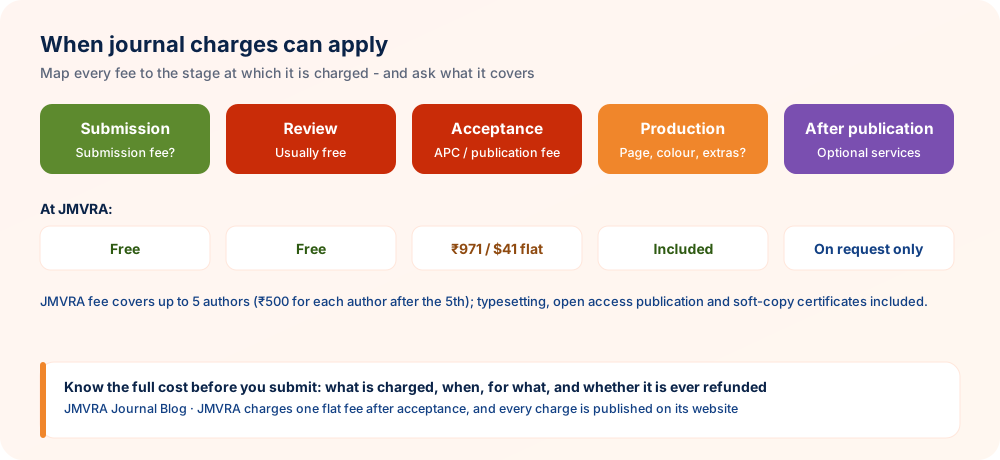
Journal Publication Fees: The Five Essentials
What Are Research Journal Publication Fees?
Research journal publication fees are sums that authors (or their institutions or funders) pay in return for publishing services. They differ because journals are financed in different ways: readers and libraries pay for subscription journals, an article processing charge often supports open access journals, and sponsors back some. The size of the publisher, the discipline and the included services also affect the amount. Certain journals levy no author fees whatever; others charge only for specific services.
Types of Journal Publication Charges
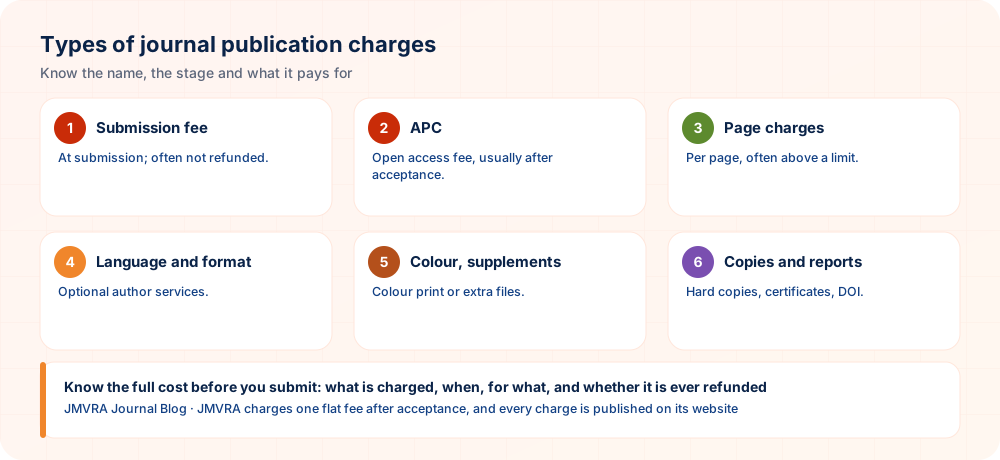
| Charge | When | What it is |
|---|---|---|
| Submission fee | At submission | A charge for handling the manuscript; frequently not returned if the paper is rejected |
| Article processing charge (APC) | Usually after acceptance | Covers open access publication |
| Page or publication charges | After acceptance | Charged per page or per article, at times beyond a page limit |
| Language editing, formatting, author services | Optional, any time | Paid services; never a requirement for acceptance |
| Colour or supplementary-material charges | Production, where applicable | For colour figures in print or additional files |
What Is an APC?
An article processing charge (APC) is a payment for publishing an article in open access, so that everyone can read it for free. It normally falls due after acceptance and pays for editorial handling, review management, production, hosting and identifiers. Not every open access journal levies APCs — many “diamond” journals charge nothing. DOAJ lists open access journals together with the charges they state.
How Much Does Research Paper Publication Cost?
No universal price exists. Selective international open access journals may charge thousands of dollars, low-cost journals ask modest amounts, and many charge nothing at all. Below is a comparison of the three journals in our publishing network — TIJER, JNRID and JMVRA — based on their published fees.
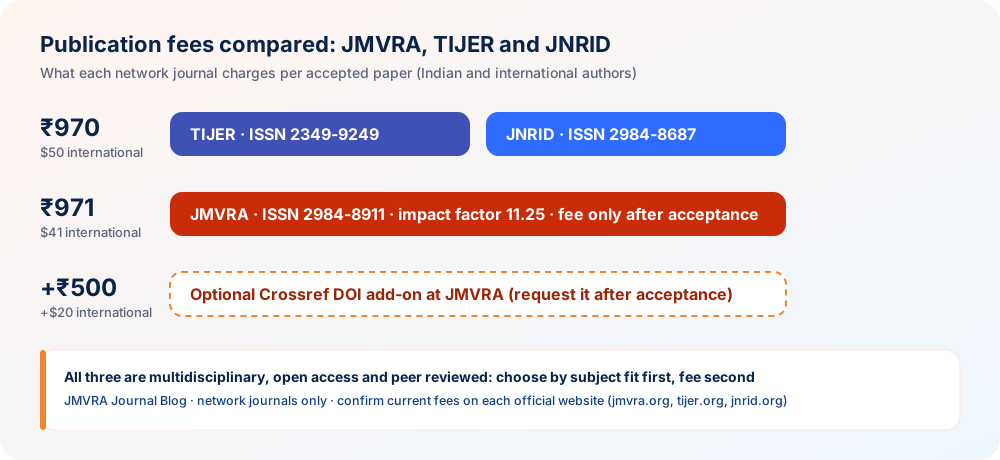
| Journal | Official website | Fee (Indian / international) | Fee type | What to check |
|---|---|---|---|---|
| TIJER – International Research Journal (ISSN 2349-9249, est. 2014) | tijer.org | ₹970 / $50 | Low-cost publication fee (per accepted paper); submissions through the Research Wave page | What the official fee page includes, how the Crossref DOI is handled, and any add-ons |
| JNRID – Journal of Novel Research and Innovative Development (ISSN 2984-8687, est. 2023) | jnrid.org | ₹970 / $50 | Low-cost publication fee (per accepted paper); submissions through the Research Wave page | What the official fee page includes, how the Crossref DOI is handled, and any add-ons |
| JMVRA – Journal of Modern and Versatile Research Approach (ISSN 2984-8911, est. June 2023) | jmvra.org | ₹971 INR / $41 USD | A single flat charge, payable only once accepted; nothing is due at submission | Up to 5 authors are covered (₹500 for each additional author); optional services are available on request |
All three are multidisciplinary, open access, peer-reviewed monthly journals, so the comparison comes down to the fee in your currency and to what each fee covers. For Indian authors the difference is a single rupee — ₹970 at TIJER and JNRID against ₹971 INR at JMVRA — which means subject fit and recent issues should guide the choice, not price. International authors see a wider gap: JMVRA asks $41 USD, nine dollars less than the $50 asked by TIJER and JNRID. Before paying any of the three, look the ISSN up on portal.issn.org, confirm the website listed there matches the one you are paying on, and ask how many authors the fee covers, because a five-author paper and a seven-author paper can end up with different totals.
Each journal publishes its own amounts, so before you pay, check the official fee page for the current fee, what it covers and any extras. Further reading: low-cost journal publication · free journal publication.
Hidden Costs Authors Should Check Before Submission
Go by the journal’s published fee policy instead of assuming every journal bills for these services — but do look out for:
- Submission charges that must be paid even when the paper is rejected.
- Page limits where extra pages cost more.
- Open access fees added on in subscription journals.
- Editing or formatting services that are presented as mandatory.
- Extra authors over the number the fee includes.
- Certificates, hard copies, DOI or reports billed on their own.
How to Compare Journal Fees and Publication Value
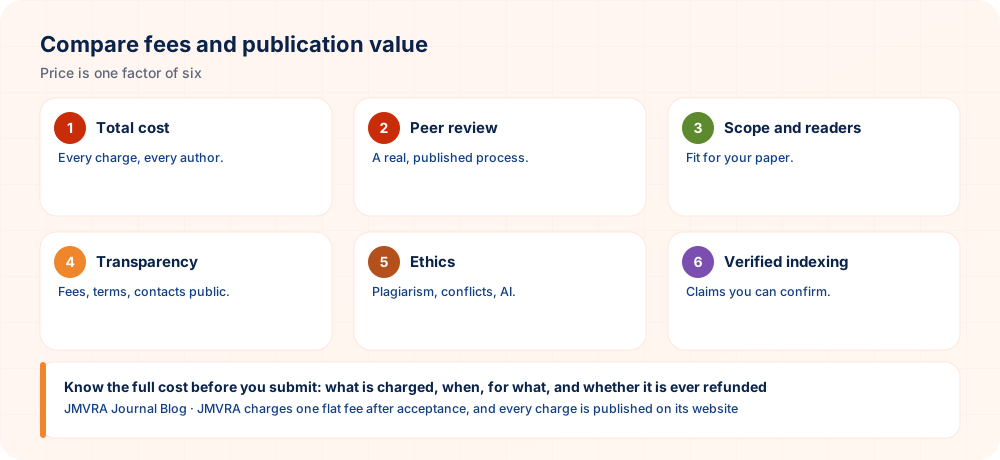
- Total cost: add up every compulsory charge for the number of authors on your paper.
- Peer-review standards: a published policy and genuine reviewer comments.
- Journal scope: a good match for your paper and its readers.
- Editorial transparency: fees, terms and contact details stated up front.
- Publication ethics: policies on plagiarism, conflicts of interest and AI use (COPE guidance makes a good yardstick).
- Verified indexing: claims that you can check yourself in the database.
- Services included: typesetting, DOI, certificates and archiving.
Do not pick a journal solely because it is cheap, or solely because it is costly. Apply Think. Check. Submit. together with our journal selection guide. Writing down your own shortlist criteria before you compare prices keeps the decision objective.
Free vs Paid Journal Publication
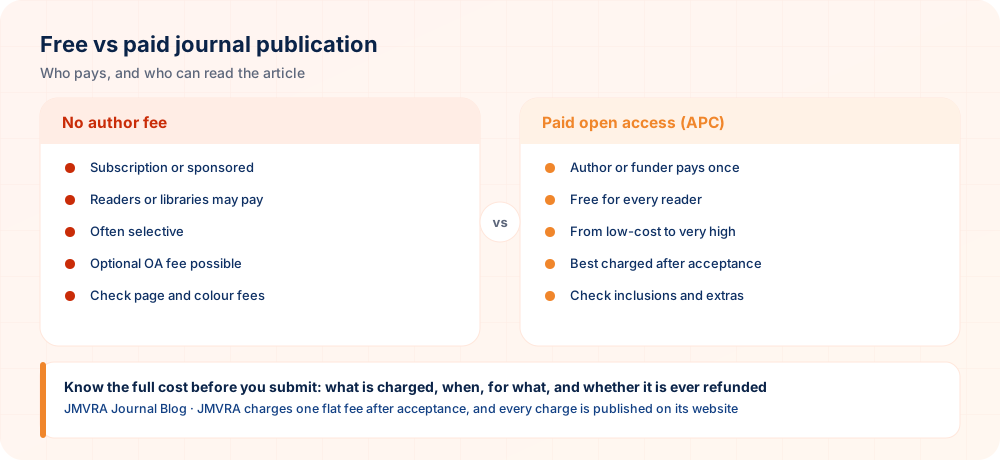
Journals that charge authors nothing are typically supported by subscriptions or sponsors, whereas paid open access journals levy an APC so that any reader can open the article at no cost. Even a subscription journal can add optional open access, page or colour fees. See free journal publication options.
Do High Publication Fees Mean Better Quality?
No. A high price does not prove quality. Some excellent journals charge nothing, some expensive ones are very selective, and some questionable journals ask for large sums. Evaluate a journal on its review process, editors, ethics, scope and verified indexing — and only then weigh the cost. A journal that is open about its editorial practices is easier to trust than one that simply advertises a price.
Publication Fees for Students
- Plan a budget early and ask your department whether it offers publication support.
- Look into institutional agreements, grants and funder policies that pay for APCs.
- Enquire about student waivers or discounts before you make a payment.
- Weigh up journals with no author fees, as well as inexpensive ones that bill only after a paper has been accepted.
Publication Fees in India
Compare fees in INR and confirm the amount you will actually pay: how many authors are covered, any taxes that apply, and the optional services you have asked for. Make payments only through the journal’s official channels and keep your receipt. Be careful with agents who add charges of their own. Related guidance: what a publication fee pays for. Saving the fee page as it stood on the day you paid gives you a record if a query arises later.
International Author Charges
Fees are sometimes quoted in a foreign currency or priced by region. Examine which currency applies, what exchange rate your bank will use, any bank or conversion charges (your bank normally bills these on their own) and taxes that may apply. JMVRA asks foreign authors for $41 USD per accepted article, which includes up to five authors; with a larger team, request written confirmation of the total from the editorial office.
Refund and Withdrawal Policies
Before paying, read the terms on refunds and withdrawal: does a rejected paper get its submission fee back? What if you withdraw after acceptance? At JMVRA nothing is paid before acceptance; once a paper is accepted and the fee has been paid, it cannot be refunded since the work has been carried out. Duplicate or excess payments are looked into on request. Read the refund policy.
Fee Waivers and Discounts at JMVRA
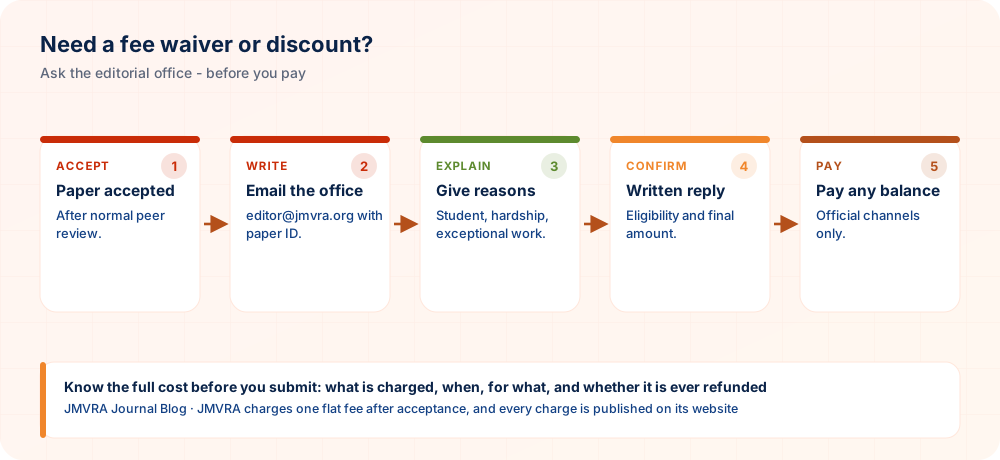
To ask for a fee waiver or discount, write to the editorial office at [email protected] (or on WhatsApp at +91 91063 65667) giving your paper ID and your grounds — for instance student status, financial hardship or exceptional work. The editorial office confirms eligibility, evidence and the final amount in writing. A request must be sent before payment, and making one has no effect on whether a paper is accepted.
Questions about fees? Submit free — pay only after acceptance
JMVRA (ISSN 2984-8911) is a peer-reviewed, open access journal spanning many disciplines. Submission is free. Specialist reviewers assess your paper, and you receive the acceptance or rejection decision by email and WhatsApp.
- 1. Follow the guidelines when preparing
- 2. Submit online
- 3. Peer review
- 4. Decision by email & WhatsApp
- 5. Go live in open access
JMVRA Fees in Full
| Item | Charge |
|---|---|
| Submission | Free |
| Peer review | Free — transparent, double-blind |
| Publication fee (Indian authors) | ₹971 INR for each accepted article, covering up to 5 authors |
| Publication fee (foreign authors) | $41 USD for each accepted article, covering up to 5 authors |
| Additional authors | ₹500 per author beyond the 5th |
| Included | Open access publishing (CC BY 4.0), typesetting, soft-copy certificates for each author, plus acceptance and confirmation letters |
| Optional, on request | Crossref DOI, hard copy of certificate, hard copy of journal, plagiarism report, transparent peer review report |
| Not covered | Bank and conversion charges; third-party permission fees; language editing before submission |
| When payable | Payable only after acceptance; get the total confirmed in writing first |
| Waivers or discounts | Ask the editorial office before you pay |
JMVRA appears in Google Scholar and is registered with Crossref and the ISSN Portal / ROAD; it is not currently indexed in Scopus, Web of Science or DOAJ. Specialist reviewers assess your paper, and you receive the acceptance or rejection decision by email and WhatsApp. Details: publication charges · DOI and hard copy requests.
Publication Fee Checklist
- Is there a submission fee, and can it be refunded?
- What does the publication fee or APC cover, and at what point is it due?
- How many authors are covered by the fee?
- What does the fee include, exactly?
- Could there be page, colour or supplementary charges?
- Which services are optional, and what do they cost?
- Which currency, taxes and bank charges apply?
- What is the refund and withdrawal policy?
- Can I get a waiver or discount, and how do I request one?
- Will I get the total in writing before I pay?
Share Your Research Through JMVRA
Get your research published in JMVRA
JMVRA (ISSN 2984-8911) is a peer-reviewed, open access journal spanning many disciplines. Submission is free. Specialist reviewers assess your paper, and you receive the acceptance or rejection decision by email and WhatsApp.
- 1. Follow the guidelines when preparing
- 2. Submit online
- 3. Peer review
- 4. Decision by email & WhatsApp
- 5. Go live in open access
Your At-a-Glance Checklist
- WhatEvery charge listed
- WhenAt submission or at acceptance
- CoversServices and number of authors
- ExtrasOptional costs disclosed
- RefundTerms read
- ConfirmGet the total in writing
Comparing Journal Charges Fairly Before You Commit Funds
Publication charges vary in structure as well as size. A systematic comparison helps you understand the real cost of each option and avoid unpleasant surprises after acceptance.
- List every possible charge. Write down submission, processing, colour figure, language editing and reprint costs for each journal. A complete list reveals which option is genuinely economical.
- Check refund and withdrawal terms. Read what happens to payments if you withdraw or if the paper is rejected. Clear terms stated in advance are a good sign of fair dealing.
- Explore waivers through your institution. Ask your library or research office about funds, agreements or waiver schemes before paying personally. Support may exist that you have not yet discovered.
- Do not read price as quality. Neither a very high nor a very low charge proves anything about rigour. Judge the journal's review practice, transparency and readership alongside its cost.
Compare total cost in writing, ask about waivers and refunds, and never let price alone represent quality.
Questions Researchers Often Ask
In Summary
Publication fees are easier to understand once you separate their parts: submission fees, APCs, page and colour charges, and optional services. Find out what is billed, when, what it covers and whether it is refundable; get the total confirmed in writing; and compare value rather than price alone. JMVRA keeps matters simple — free submission and review, a single flat fee after acceptance, every charge published, and waivers or discounts available on request to the editorial office.
Ready to publish? Submit free to JMVRA
JMVRA (ISSN 2984-8911) is a peer-reviewed, open access journal spanning many disciplines. Submission is free. Specialist reviewers assess your paper, and you receive the acceptance or rejection decision by email and WhatsApp.
- 1. Follow the guidelines when preparing
- 2. Submit online
- 3. Peer review
- 4. Decision by email & WhatsApp
- 5. Go live in open access
Authoritative Resources
- Directory of Open Access Journals (DOAJ) — a listing of open access journals and their stated fees
- Think. Check. Submit. — assess a journal before you submit
- Committee on Publication Ethics (COPE) — resources on publication ethics
- JMVRA publication charges
JMVRA Fees Summary
- SubmissionNo charge at JMVRA
- ReviewFree
- AcceptanceA single flat fee
- ExtrasOnly if requested
- WaiverRequest before paying
Related: Low-cost journal publication · Free journal publication · Submit Paper.
Ready to Publish? Submit to JMVRA
JMVRA is aligned with UGC's Suggested Parameters for Choosing Peer-Reviewed Journals.
JMVRA is a Transparent, Peer-Reviewed, Open Access Journal (Refereed Journal). Following the discontinuation of the UGC and UGC-CARE journal listing, and in alignment with the latest UGC-CARE recommendations and guidelines, JMVRA is aligned with UGC’s Suggested Parameters for Choosing Peer-Reviewed Journals.
Helpful pages on jmvra.org
Key Terms
Subjects and search phrases this article addresses.
Related Reading
Further guides on publication fees and affordable publishing.
Low-Cost Journal Publication: Affordable Options Compared
Read the guide RelatedPublishing a Research Paper Without Fees: Options
Read the guide RelatedWhat a Research Paper Publication Fee Really Covers
Read the guide RelatedHow JMVRA's Low-Cost Model Balances the Books
Read the guide RelatedA Complete Guide to Getting Published: Research Paper Publication Step by Step
Read the guide RelatedPeer Review Defined: A Guide to the Journal Review Process
Read the guideKeep Reading on the JMVRA Blog
This guide belongs to the JMVRA journal blog, which offers practical advice on publishing, indexing, metrics and research integrity, written to be checkable instead of promotional.