
Becoming a Reviewer
The JMVRA panel includes 3000+ expert reviewers drawn from institutions in India and around the world. Researchers who hold a PhD or have equivalent experience may apply by emailing [email protected] with their CV and areas of expertise. A concise CV that highlights relevant publications helps editors match you with suitable manuscripts.
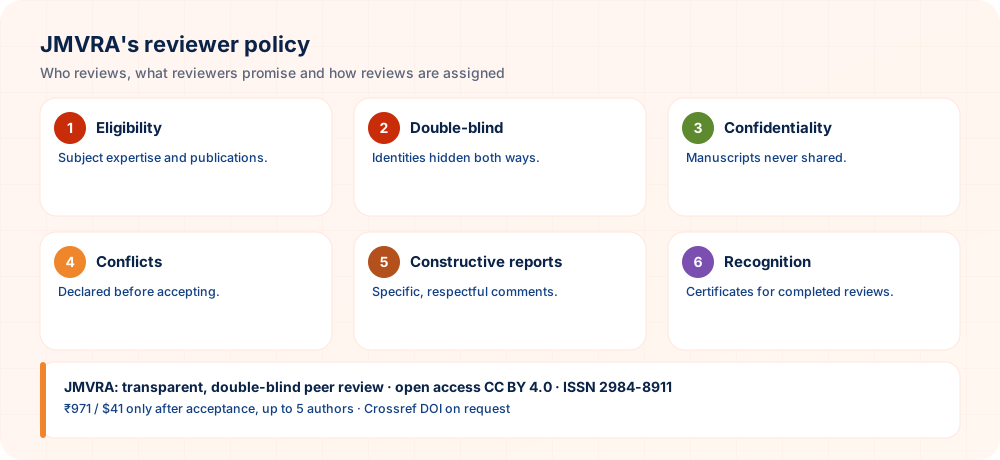
Reviewer Obligations
- Respond to review invitations, accepting or declining, within 48 hours
- Finish reviews inside the agreed time frame (typically 5–7 working days)
- Give authors feedback that is objective, specific and constructive
- Keep all manuscript content strictly confidential
- Declare any conflict of interest and step aside from the review
- Do not keep, copy or cite unpublished manuscripts that are under review
- Do not approach authors directly while or after reviewing
Reviewer Rights & Benefits
- A place in JMVRA's yearly list recognising reviewers
- A digital appreciation certificate for active reviewers
- Active reviewers can ask for a waiver of the publication fee on their own submissions (subject to editorial approval)
- Reviewers who finish 5+ reviews within a year gain priority reviewer status
Reviewer Removal
Reviewers who keep missing deadlines, submit inadequate reviews or breach confidentiality will be taken off the reviewer panel, and JMVRA reserves the right to withdraw reviewer recognition in cases of misconduct.
What Makes a Good Reviewer
Expertise
Familiarity with the subject and methods.
Fairness
Evaluates the work rather than the authors.
Constructiveness
Shows how the paper can be strengthened.
Reliability
Replies quickly and honours commitments.
Reviewers and the Use of AI Tools
Read about joining the reviewer team.
Practical Tips for Reviewers Working Under Confidentiality Rules
Good reviewing is a service to authors and editors alike. These habits help you stay confidential, fair and useful, even when your own schedule is crowded.
- Decline when conflicted. If you know the authors, compete with them or have strong views on the topic, say so and decline politely. An early refusal is more helpful than a compromised report.
- Never share the manuscript. Do not forward files, discuss details with students or paste text into public tools. Confidential material should stay within the review process unless the editor grants permission.
- Comment on the work, not the person. Frame criticism around evidence, method and argument, and suggest concrete improvements. Respectful, specific comments are easier for authors to act on than blunt dismissal.
- Separate major from minor points. Open your report with a short summary of the paper, then list essential concerns apart from small language or formatting matters, so editors can quickly weigh your recommendation.
- Tell the editor about limits. If a section lies outside your expertise, say so plainly. Honest boundaries let the editor seek additional input instead of relying on an overconfident judgement.
Protect the manuscript, declare conflicts early, and write specific, courteous comments that help the editor decide and the author improve.
Questions Researchers Often Ask
At-a-Glance Checklist
- Expertise checkedPrior to accepting
- Conflicts disclosedEach time
- Confidentiality upheldNothing shared or reused
- Constructive reportComments that can be acted on
- Deadlines honouredOtherwise decline early
How Transparent Peer Review Works, Stage by Stage
- SubmissionScreening at the beginning checks plagiarism, layout and whether the paper is within the journal’s scope.
- Choosing reviewersAppointments of specialists in the relevant field are made via the Scholar9 portal.
- Double-blind reviewFour things are weighed: clarity, significance, method and originality of the paper.
- DecisionThe outcome (accept, revise or reject) reaches authors via email and WhatsApp.
- RevisionAuthors reply to every comment, dealing with one point at a time.
- TransparencyA review record is kept at Scholar9; if you want the report, request it.
Open reports, optional reviewer identity and open participation are the three models of transparency. This is how JMVRA applies them.
Ready to Publish? Submit to JMVRA
JMVRA is aligned with UGC's Suggested Parameters for Choosing Peer-Reviewed Journals.
JMVRA is a Transparent, Peer-Reviewed, Open Access Journal (Refereed Journal). Following the discontinuation of the UGC and UGC-CARE journal listing, and in alignment with the latest UGC-CARE recommendations and guidelines, JMVRA is aligned with UGC’s Suggested Parameters for Choosing Peer-Reviewed Journals.
More useful pages at jmvra.org
Key Terms
Subjects and search phrases this article addresses.
Related Reading
Further reading on the same theme from the JMVRA blog.
JMVRA Publication Process & Author Guidelines
Read the guide RelatedLaunching an Academic Journal: Concept to First Issue
Read the guide RelatedConference Proceedings at JMVRA: How Review Works
Read the guide RelatedDisclaimer
Read the guide RelatedFind Published Theses & Dissertations on JMVRA
Read the guide RelatedOpenAlex Explained for Researchers and Publishers
Read the guideKeep Reading on the JMVRA Blog
You are reading part of the JMVRA journal blog, a source of hands-on guidance about publishing, indexing, metrics and research integrity that aims to be verifiable, not promotional.